| Marlene Anderka
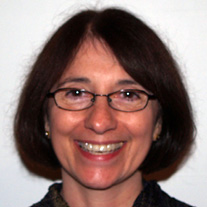 Marlene Anderka ScD, MPH, served as the Principal Investigator and Director of the Massachusetts Center for Birth Defects Research and Prevention at the Massachusetts Department of Public Health (MDPH) for 15 years from 2001 to 2016. Dr. Anderka played a key role in expanding the Massachusetts Center. She retired after 37 years of work in maternal and child health at the Massachusetts Department of Public Health. She has continued, even after retirement, to work with the Massachusetts Center Team on NBDPS and BD-STEPS projects. Marlene Anderka ScD, MPH, served as the Principal Investigator and Director of the Massachusetts Center for Birth Defects Research and Prevention at the Massachusetts Department of Public Health (MDPH) for 15 years from 2001 to 2016. Dr. Anderka played a key role in expanding the Massachusetts Center. She retired after 37 years of work in maternal and child health at the Massachusetts Department of Public Health. She has continued, even after retirement, to work with the Massachusetts Center Team on NBDPS and BD-STEPS projects.
Dr. Anderka was asked her thoughts about NBDPS in 2014, here are her answers:
Why do you think the NBDPS is important?
The NBDPS is the largest study of its kind ever conducted in the United States. Its large size allows researchers to study the causes of both common and rare birth defects. It also lets us look at the effects of rare exposures, such as certain medications, on the risk of birth defects. Because the study is ongoing, we can address new concerns that arise. We can also use the data to confirm findings between exposures and birth defects found in other studies. Finally, this study brings leading researchers from several states together, which makes it possible to solve problems that no one researcher could solve alone.
How long have you worked in this field? On the NBDPS?
I have working in maternal and child health epidemiology for 35 years and have focused on birth defects and the NBDPS for the last twelve years.
What are your research interests?
I am interested in nutrition and medication use in pregnancy and how they might affect a baby. My recent work has focused on treatments for nausea and vomiting during pregnancy and how they might harm the baby. The NBDPS collects data on nausea, vomiting and medication use during pregnancy, so it offers a chance to research questions related to this common condition.
What do you think the next big discoveries will be?
Looking forward, I think we will be able to better understand multiple risk factors and how they work together to cause birth defects. This will allow us to identify subgroups more likely to have a child with a birth defect after a certain exposure.
What are your major interests outside of work?
Knitting and biking: My most recent knitting passion is mittens from around the world. The shapes and color patterns are endless and many are unique to different places and populations. My husband and I bought new bicycles last year and love to ride the rail trails.
What would you like the study participants to know about you?
By nature I am persistent and determined. I will work hard to use the information they provide to the NBDPS to better understand what causes birth defects.
Selected NBDPS Publications:
Anderka M, Mitchell A, Louik C, Werler M, Hernández-Díaz S, Rasmussen S, and the National Birth Defects Prevention Study. Medications used to treat nausea and vomiting of pregnancy and risk of selected birth defects. Birth Defects Res A Clin Mol Teratol 2012; 94(1):22-30.
Anderka M, Lin AE, Abuelo DN, Mitchell AM, Rasmussen RA. Reviewing the Evidence that Mycophenolate Mofetil is a Teratogen. Am J Med Genet. 2009; 149A(6):1241-1248. |