| Jennita Reefhuis
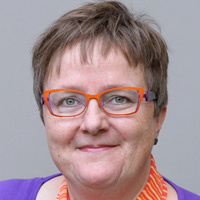 The overall lead investigator at the CDC for the Centers for Birth Defects Research and Prevention is Jennita Reefhuis, PhD. She continues to work with a team of computer programmers, communication specialists, and scientists who coordinate the overall study logistics for BD-STEPS as she did for NBDPS. Dr. Reefhuis’ research interests include fertility treatments, and medications and their relation with birth defects.
. The overall lead investigator at the CDC for the Centers for Birth Defects Research and Prevention is Jennita Reefhuis, PhD. She continues to work with a team of computer programmers, communication specialists, and scientists who coordinate the overall study logistics for BD-STEPS as she did for NBDPS. Dr. Reefhuis’ research interests include fertility treatments, and medications and their relation with birth defects.
.
Why do you study birth defects? Why do you think the NBDPS is important?
I think every child deserved the best possible start in life, and I want to do everything I can do to help make that possible. Because of all the mothers who take part in the NBDPS we have the chance to look at specific birth defects, which is something most other studies cannot do.
How long have you worked in this field? On the NBDPS?
I worked for 5 years at a birth defects registry in the Netherlands, then I came to the United States and I have worked at the birth defects center at the CDC for 8 years now.
What are your major interests outside of work?
Playing with my two kids, photography, baking and crafts
What would you like the study participants to know about you?
That I am a farmer’s daughter from a small village in the Netherlands, who as a child would have never dreamed she would be living in a big US city, and working on such a great study.
Selected NBDPS Publications:
Reefhuis J, Honein MA, Schieve LA, Correa A, Hobbs CA, Rasmussen SA, and the National Birth Defects Prevention Study. Assisted reproductive technology and major structural birth defects in the United States. Hum Reprod. 2009; 24:360-6.
Alwan S, Reefhuis J, Rasmussen SA, Olney RS, Friedman JM for the National Birth Defects Prevention Study. Use of selective serotonin-reuptake inhibitors in pregnancy and the risk of birth defects. N Engl J Med 2007;356:2684-92.
Reefhuis J, Rasmussen SA, Friedman JM. Selective serotonin reuptake inhibitors (SSRIs) and persistent pulmonary hypertension of the newborn [letter] N Engl J Med 354:2188-2189, 2006. |